

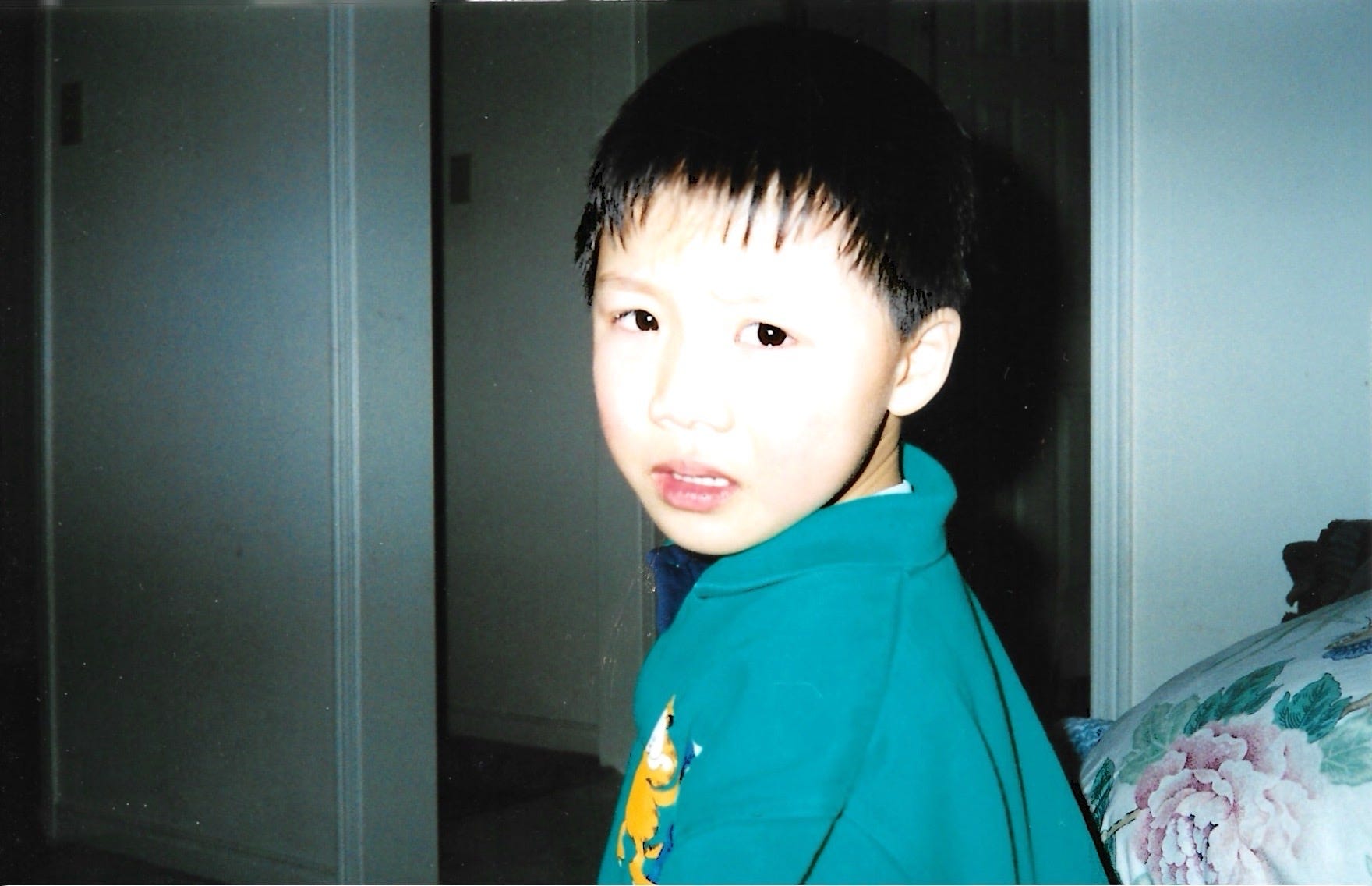
I was nine years old the first time I made a real decision.
Not the kind adults hand you. Not “what do you want for dinner” or “which shirt do you want to wear.” The kind where the safe option is to stay quiet and you choose not to.
I grew up in a house where noise was dangerous.
An accidental laugh. A dish placed too hard on the counter. A door closed too loud. Any of it could set my father off. Beatings. Screaming. Two-hour lectures inches from your face, rage behind his eyes. It didn’t matter where we were. Our living room. The middle of Home Depot. He would berate us without a second thought. And never, in all the years I can remember, a single apology.
I noticed what it was doing to everyone.
I noticed it in myself. The way I had to shake off the morning’s episode before I could show up at school and look normal. I noticed it in my brother, the way he would disappear into television and video games after it happened. And I noticed it in my mom. She kept a Gatorade bottle by her bed. I knew it wasn’t Gatorade. I knew it was wine. I knew she needed it to fall asleep.
So I called a family meeting.
I was nine, maybe ten. I stood in our living room, trembling, tears running down my face, and I told my father: you are a bad father. You are doing things to this family that are taking us in the wrong direction.
I’m sure I didn’t say it that cleanly. I’m sure I looked like a kid crying about being hit. But somewhere underneath the tears, I knew something. I could see where one person’s actions were dragging an entire family. And I decided that staying silent was more dangerous than speaking up.
Nothing changed. Not immediately. The house didn’t get quieter. But something changed in me.
I felt light.
Not because the situation improved. Because the weight of carrying hundreds of mental notes, building a case inside my own head, rehearsing what I would say, all of that released the moment I opened my mouth. The backlog cleared. And even though I couldn’t change my father, I realized I could change myself. I could change my environment. I could start building my own independence.
That was the first decision I ever made. I was nine.
That moment set the pattern for everything that came after. Most people wait their entire lives for the courage that nine-year-old had.
Up until 31, I never kept more than $5,000 in my bank account.
I was building. Photography first. 400 weddings, editorial work, magazine shoots. Then artist management. Then e-commerce. Every dollar above the bare minimum went right back in. Workshops. Flights to LA for meetings and shoots. Better gear. Dinners with people passing through Toronto.
I decided early that I would tie my identity to my growth, not my bank balance. That security could wait.
There were months where income arrived late, expenses lived on my credit card, and the next deposit was a complete mystery. Confidence was the only thing keeping me moving forward.
But I kept deciding. Deciding to stay an entrepreneur when the smart move was to get a job. Deciding to reinvest when the safe move was to save. Deciding to try again when the reasonable move was to quit.
Then the pandemic hit. And everything stopped.
Both businesses died overnight. Photography and music management. Gone.
A decade of reinvesting in myself meant a decade of having nothing in reserve. I went into debt. I applied for CERB, the government’s pandemic funding. And then I did something I never thought I’d have to do. I called my mom and asked to borrow money.
I remember hanging up the phone and sitting on the edge of my bed, doing the math on a decade. Ten years of work. Ten years of risk. And I was borrowing money from the woman who used to keep wine in a Gatorade bottle just to get through the night.
That was the lowest point. Not financially. Financially I’d been low before. But mentally, the math hit different this time. I’d worked for a decade and had no bank statement to show for it. All the momentum I’d been building, years of it, evaporated in weeks.
I thought about quitting. Seriously. Getting a job. Letting the whole thing go. The voice in my head that had been quiet for years suddenly got very loud: this was stupid. You should have played it safe. You should have built something more stable.
But I didn’t quit. Not because I was brave. Because by that point, deciding was the only thing I knew how to do. The muscle was too built to break. Even at the bottom, I kept making small decisions. Adjusting. Pivoting. Looking for the next door.
And eventually, a business took off. Beyond anything I’d ever built before. The same decade of investing in skills, network, and self that had left me broke was also the reason the opportunity existed. Everything I’d invested in for a decade finally compounded. And the return was bigger than anything I could have planned.
That’s what people miss about risk. The cost of playing it safe compounds just as quietly as the cost of betting on yourself.
But not every decision I made was the right one. And worse, not every decision I avoided was harmless.
I managed a music artist for years. I believed in him. The talent was real.
Early on, I called in a personal favor to get him a press opportunity. The kind of thing you don’t get twice. I used a relationship I’d spent years building, put my name on the line, and set it up.
He didn’t show up on time. Then he decided not to come at all. Told me to handle it.
I sat in that interview looking like a clown. I’d told them we needed fifteen more minutes, fifteen minutes ago. Then I had to make up an excuse they clearly didn’t believe. I didn’t look like the manager. I looked like a failed babysitter.
That was the moment I knew. Not in my head. In my gut.
I should have had the conversation immediately. The honest one. The one where you sit down and say “this isn’t working and here’s why.”
I didn’t.
I waited. I rationalized. I told myself it would get better, that the tension was temporary, that the work would speak for itself. And the longer I waited, the wider the gap grew. By the time I finally had the conversation, it was too late. Not because the problems were unsolvable, but because the silence had compounded into something neither of us could undo.
I learned a phrase during that time: honest conflict is better than dishonest harmony.
I wish I’d learned it sooner. I live by it now.
The cost of avoiding that decision wasn’t just a failed partnership. It was years of my life spent inside a situation I knew wasn’t right, performing a version of peace that didn’t exist. The avoidance felt safe in the moment. In hindsight, it was the most expensive choice I made.
Most people are carrying a version of this right now. A conversation they know they need to have. A truth they keep swallowing because the silence feels safer than the conflict.
I moved to Tokyo.
The first year was quiet in a way I didn’t expect. I knew nobody. I spent my days wandering the city, sitting in cafes where I couldn’t read the menu, ordering by pointing at pictures. Some days the only person who heard my voice was a convenience store cashier.
Every morning I’d walk among thousands of people my age, mid-thirties, all heading to the same job in the same clothes. Same lunch. Same commute home. Same conversations.
And something shifted.
The gap between my life and theirs wasn’t about culture. It wasn’t about East versus West. It was about decisions. A decade of them. Every time I’d chosen to invest in a skill instead of saving the money. Every time I’d said yes to something uncomfortable. Every time I’d walked through a door that scared me. Those decisions had compounded across every domain of my life. Health. Wealth. Relationships. Identity. We were the same age, breathing the same air, walking the same streets. But the lives we were living were separated by a thousand small choices made over a thousand ordinary days.
Your life is not the result of one big moment. It’s the compound interest of every small decision you made when nobody was watching.
That’s when the pattern clicked.
Every good thing in my life came from a decision. The photography career. Leaving the artist. Surviving the pandemic. Moving to Tokyo. Every one of those chapters started the same way. Not with a plan. Not with certainty. Not with feeling ready. With a decision.
And every regret? Those started the same way too. With avoidance. With waiting. With telling myself I needed more time before I could act.
The decisions didn’t always lead where I expected. Some of them led to failure. Some to pain. But the ones I never made? Those cost me more than any failure ever did. Because failure teaches you something. Avoidance just takes your time and gives you nothing back.
I think about this every day. Not as philosophy. As practice.
I decided to learn Japanese and Mandarin at 34 because the investment would compound for decades. I decided to build a personal brand because the skills and stories I’d accumulated over fifteen years were worth more shared than stored. I decided to build Clarity because I’d lived the cost of indecision long enough to know that most people aren’t stuck because they lack options. They lack a way to think through them.
Every one of those decisions felt too early. None of them felt ready. That’s the point.
If you’ve read this far, you recognized something in these stories. Not my details. Yours.
The conversation you’ve been avoiding. The move you’ve been researching for months. The idea sitting in your notes app. The version of your life you can see clearly but haven’t started building.
You already know what the decision is. You’ve known for a while.
More time won’t make it easier. It won’t give you clarity you don’t already have. It will just make you older by the time you finally do what you were always going to do.
I learned this at nine years old, standing in my living room, trembling, telling my father the truth. Nothing changed that day except me. And that was enough.
It’s always enough.
Not because deciding guarantees the right outcome. But because the weight of not deciding is heavier than any failure you’ll ever face. The lightness that comes from finally acting, from saying the thing, walking through the door, that lightness is real. I felt it at nine. I felt it booking a flight to Tokyo. I feel it every time I stop rehearsing and start doing.
Your decisions are the only thing that will ever change your life. Not your circumstances. Not your timing. Not whether you feel ready.
Somewhere right now, there’s a version of you standing in a living room, trembling, knowing exactly what needs to be said.
Say it.