

The year is 2023. I’m sitting in my Range Rover in the Tim Hortons drive-through. Noise-cancelling speakers. Soft leather seats. It’s warm. It’s quiet. It’s mine.
Flashback to highschool. Almost two decades ago, I was taking two buses in Mississauga just to get pho after school. The 61 South from Mavis and Bancroft to Square One, transfer, then the 35 to Pho 99 at Hurontario and Eglinton. It took about an hour and fifteen minutes each way for those delicious noodles.
I had to go back into Google Maps just now to remember the geography. That’s how long ago it was.
I always wanted to be the cool guy I used to see downtown in my early twenties. The guy who made me wonder how he did it. The clothes. The car. The confidence. But not just on the outside. Cool inside too. Character, real friendships, life stories, and wisdom. I made it a personal vow to do things the right way, which always meant the long road.
So I spent all of my twenties and my early thirties becoming him. Twelve years in total. Behind a camera first. 400 weddings photographed. Then managing an artist and bringing them a platinum plaque. Then, building e-commerce businesses from scratch. Start, fail, start, fail, start, figure it out. There was a good decade where I had nothing in the bank. Years where the smart move was to quit and get a job. I didn’t. Not because I was brave. Because I was stubborn. Maybe those are the same thing. Idk.
By 34, I finally reached the intersection of success and stability. I had the clothes, the car, the network, the reputation, and finally, some money. The kid who had nothing becoming the man who built everything. That was the dream.
And I was that. In the city I was born and raised in. I was grateful. Cloud 9 each and every morning I hopped in my Range to go to the gym. Cloud 9, even when sitting in traffic. Every part of me was filled with joy.
But even with all this, something was off.
Toronto had gotten smaller.
Not physically. Mentally. The conversations around me had shrunk to mortgage rates, settling down, and ironically, which new pho franchise just opened. The city that produced Drake. Where I watched someone who started from the bottom (no pun), become the biggest artist on the planet and thought, “if this city can make that happen, imagine what it can make happen for me.” That Toronto doesn’t exist anymore.
The affordability crisis had gutted the culture. The energy had drained out of the streets. I loved what Toronto was. But I couldn’t pretend it was still that.
And then something hit me that I wasn’t ready for.
My parents came from Hong Kong.
They disliked their conditions and feared the future there enough to restart their entire lives in a foreign country. Left everyone and everything they knew. Friends. Family. Missed birthdays. Missed weddings. Missed funerals.
My mom cleaned toilets for $3 an hour when she first came to Canada. Birthday cakes were too expensive, so my parents bought each other apple pies to celebrate. I have this image of my dad sitting in a plastic chair at city hall, holding a number, waiting to be called, surrounded by documents he couldn’t read. Not being able to ask for help because of his broken English. Most days, I still can’t comprehend how they built a foundation from that.
And from that, from literally nothing, they built a real life. A detached home in the suburbs. Living the Canadian dream. Church on Sundays. Taking the kids to swimming lessons and extracurricular math classes on weekdays. Eventually, sending both of their kids to university.
My entire life, the foundation of everything I’d built, wasn’t something I earned. It was something they suffered for. Every bus I took, every school I attended, every English word I spoke fluently without thinking — all of it was paid for in ways I was only beginning to understand.
Everything I’d accomplished was standing on their shoulders. The single greatest contribution to my life wasn’t something I did. It was being born in a Western country because two people gave up everything. I grew up with English. I had a real education. I grew up with a culture that told me to dream big and believe I could be anything. The toughest thing I had to do was study. Woop-di-doo. This life was off their backs. They built it. With $3-an-hour toilet cleaning and apple pies instead of birthday cakes.
I felt shame. Gratitude. Guilt. And then something stronger than all three.
I’d spent years calculating what I’d lose by leaving. I never once calculated what I was losing by staying.
If my parents could leave everyone they ever knew for a better life, how could I use “my friends live here” as an excuse to stay in a city that was shrinking?
How dare I.
At first, a loud voice said Los Angeles.
Made sense. I’d spent half my twenties there. Photography workshops, model shoots, music industry meetings at Interscope and Capitol Records (so cool, btw). I had friends there. The weather was perfect. And LA was the opposite of Toronto — a city where everyone thought big. In Toronto, only a handful of people dreamed at that level and most of them left. LA was the first place I’d ever been where ambition was the default, not the exception. It felt like the obvious next move.
I applied for the US work visa. A year of processing. Thousands in lawyer fees. And then, I got it. I’d gotten what millions of people around the world would give anything for. A legitimate path into the United States. The American dream, on paper, in my hands.
I remember sitting in my downtown apartment off Spadina the day the visa was approved, looking at apartments in West Hollywood on my laptop. I had a shortlist. I had a budget. I was ready to go. I couldn’t believe it.
Looking back, the LA voice was so loud because it was the safe version of being brave. Still optimizing for the least amount of loss, not the greatest amount of life.
And then a quieter voice said something I couldn’t unhear.
“Wouldn’t it be nice if we spent the second half of life in Asia?”
Around the same time, I visited Tokyo for the first time. Nine days.
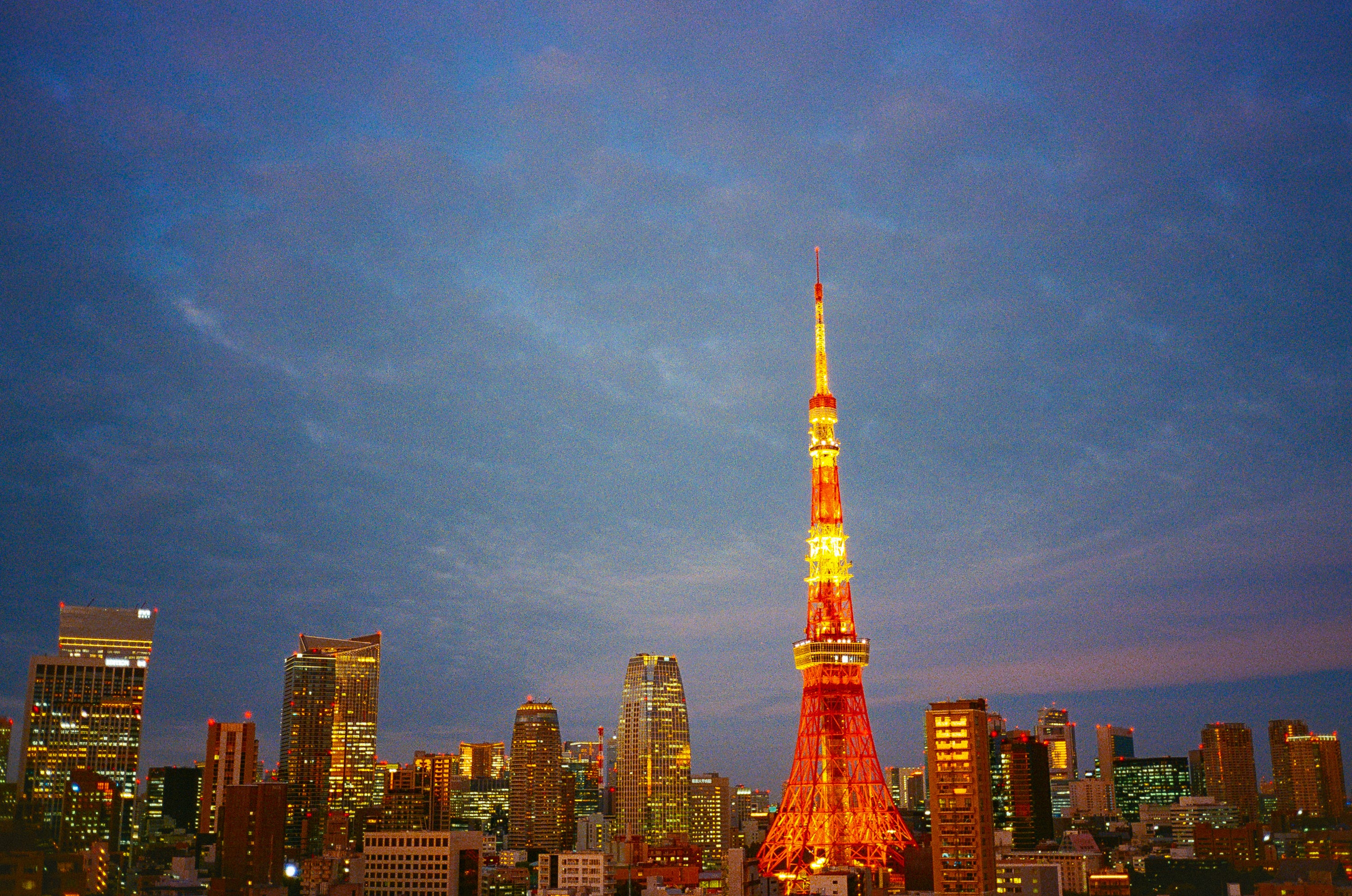
I remember exploring Ginza, designer storefronts the size of buildings, hundreds of people moving in perfect silence around me. Nobody bumped into anyone. Nobody raised their voice. The entire city was moving like a single organism. The dark, luxury, interior lighting of the Alphard pulling up if we got lucky with the Uber.
I thought: this shit is actually mad.
Nine days in Tokyo was nothing. Everything I experienced was the surface. The tourist version. Behind the language barrier were conversations I couldn’t have, places I couldn’t find, and an entire culture I could see but couldn’t access. I was watching through glass.
One night I got lost walking back from a convenience store in Shinjuku. Wrong turn somewhere. Ended up on a residential street I’d never seen. No tourists. No English. Just houses, power lines, and a row of vending machines humming in the dark. I bought a hot Boss coffee from one of them, stood on the sidewalk, and drank it. No idea where I was. Didn’t care. My phone was at 4%. I remember thinking, this is the calmest I’ve felt in years. Standing on a street I can’t pronounce, drinking canned coffee, completely lost. Meanwhile, back in Toronto I used to white-knuckle the steering wheel on the Gardiner doing 20km/h in traffic, quietly speaking affirmations to calm me down. “You are blessed. You are in a Range Rover. You will not let Toronto traffic disturb you.”
When I came back to Toronto, I started taking Japanese lessons.
And that’s when everything connected.
Japanese and Cantonese share overlapping sounds, words, and kanji — the traditional writing system of both Hong Kong and Japan. Through learning Japanese, I reconnected with my own heritage. A language I should have known better. A culture I should have understood deeper. It came through the back door of a completely different country.
A homecoming disguised as an adventure.
I’d found a city where everything was done with intention. Not in a flashy way. In an honest way.
Growing up, I’d find maybe one or two people who carried themselves at this level. The guy who had the style, the work ethic, the quiet confidence. In Tokyo, it’s not one or two people. It’s the whole city. The ramen shop owner who’s been perfecting the same recipe for 30 years. The barber who treats a haircut like surgery. The convenience store clerk who bags your egg sando and Pocari Sweat like it matters. Shit, even some salaryman in their 50’s and 60’s had this oldman swagger that would peak even the coolest kids on Queen West. Everyone here takes their craft seriously. Not for attention. Because that’s the standard.
The loud voice had said Los Angeles. The quiet voice had said Tokyo.
The quiet voice was right.
The first year and a half was brutal.
I knew nobody. I couldn’t read a menu. I couldn’t ask for directions. Trying to explain to a barber how I wanted my fade was the absolute worst. I sat in my apartment some nights and thought: Derek... what have you done.
One night I went to a yakiniku spot near my apartment. Sat down. The menu was entirely in Japanese. I pointed at something that had a picture of what I was pretty sure was beef. It was not beef. I don’t know what it was. Some kind of organ, maybe intestine, grilled to a texture I would describe as “aggressive.” I ate every piece with the signature move you learn as a kid — a mouth stuffed with rice to hide the taste, and swallowing before things were fully chewed — just because the chef was watching me from three feet away and I’d rather die than send it back in a language I didn’t speak. I walked home and ate a 711 onigiri at midnight like a man who had just been humbled by a menu.
There’s a loneliness that comes with starting over that nobody warns you about. Not the kind where you miss people. The kind where you realize that every piece of identity you built — your reputation, your network, your place in a city — means nothing here. You’re nobody. You’re starting from actual zero.
Some nights I’d think about my dad in that plastic chair at city hall. At least I had Google Translate.
Whenever I came back to Toronto and saw my mom, she would always ask how it’s going. I never had the nerve to tell her a shred of negativity about my experience. She always worried too much about me. The last thing I wanted to do was cause her any more concern. She had already done so much for both of us.
Every time I came back to the city as well, I’d do my best to organize dinners and hangouts with literally everyone. But each time, I could feel the list of “who to catch up with” and the list of “what to catch up on” getting heavier and heavier. To the point both sides probably felt like, “what’s the point?” You can catch up for hours and hours and still feel like you’re drifting apart. I’m not saying I’d change the decision. I’m saying the decision changed things I can’t get back. Those are different sentences.
It’s the biggest decision I’ve ever made.
Not just externally. Internally. Moving here cracked open something I didn’t know was closed.
The pride of doing what my parents did — going to a foreign country, filling out forms in a language I barely understood, anxiety at 100, starting from zero. I finally understood what they went through. Not intellectually. But physically. Sweat dripping from confusion and embarrassment on my body (it doesn’t help it’s always so poorly ventilated at any city hall). The loneliness of the first year. The fear that maybe this was a mistake. And the slow, quiet realization that it wasn’t.
My appreciation for my parents went from something I said to something I felt. Having lived even a fraction of what they went through, I want to give them more. My mom, especially. More of the world. More of what’s possible. Because I finally understand what it cost them to give me everything. I need to show her it was all worth something.
My parents didn’t have a framework. They didn’t have a pros and cons list. They didn’t read a book about cognitive bias. They had a vision for a larger life and a country that was closing in on them, and so they bought plane tickets. They didn’t overthink it. They couldn’t afford to. I could. And that was the problem. Comfortable people make the worst decisions because they have the luxury of making none at all.
This move made me a better entrepreneur. A better son. A better human. It also made me a 36-year-old who just learned how to properly order coffee in Japanese. But hey, that’s part of it.
Toronto gave me everything I needed to start. Tokyo is giving me everything I need to become.
I still get lost and wander my neighbourhood on some random evenings. Order a hot milk tea from the vending machine. I look around and think. It’s warm. It’s quiet. It’s mine.
The vulnerability in your posts is powerful, Derek. It’s inspiring! Keep going.